
What Is Context Engineering? The Key to the Next Generation of AI Agents
Discover how AI is evolving beyond prompt engineering to systems that comprehend, retain, and adapt in real-time.

AI has revolutionized trip planning, for example. Unlike early chatbots, modern AI can plan complex trips, suggesting routes, accommodations, and attractions based on your preferences. This progress comes from a shift in how we design AI interactions: moving from prompt engineering to context engineering. Instead of just asking the right question, we now create an environment where the AI has the necessary information to understand your situation and take helpful action.
The Rise and Limits of Static Prompting
Prompt engineering became important with the rise of powerful models like GPT-3. The quality of the output depends a lot on how clear the input prompt is, making it a valuable skill. The practice of prompt engineering developed through several key stages, each adding more sophistication.
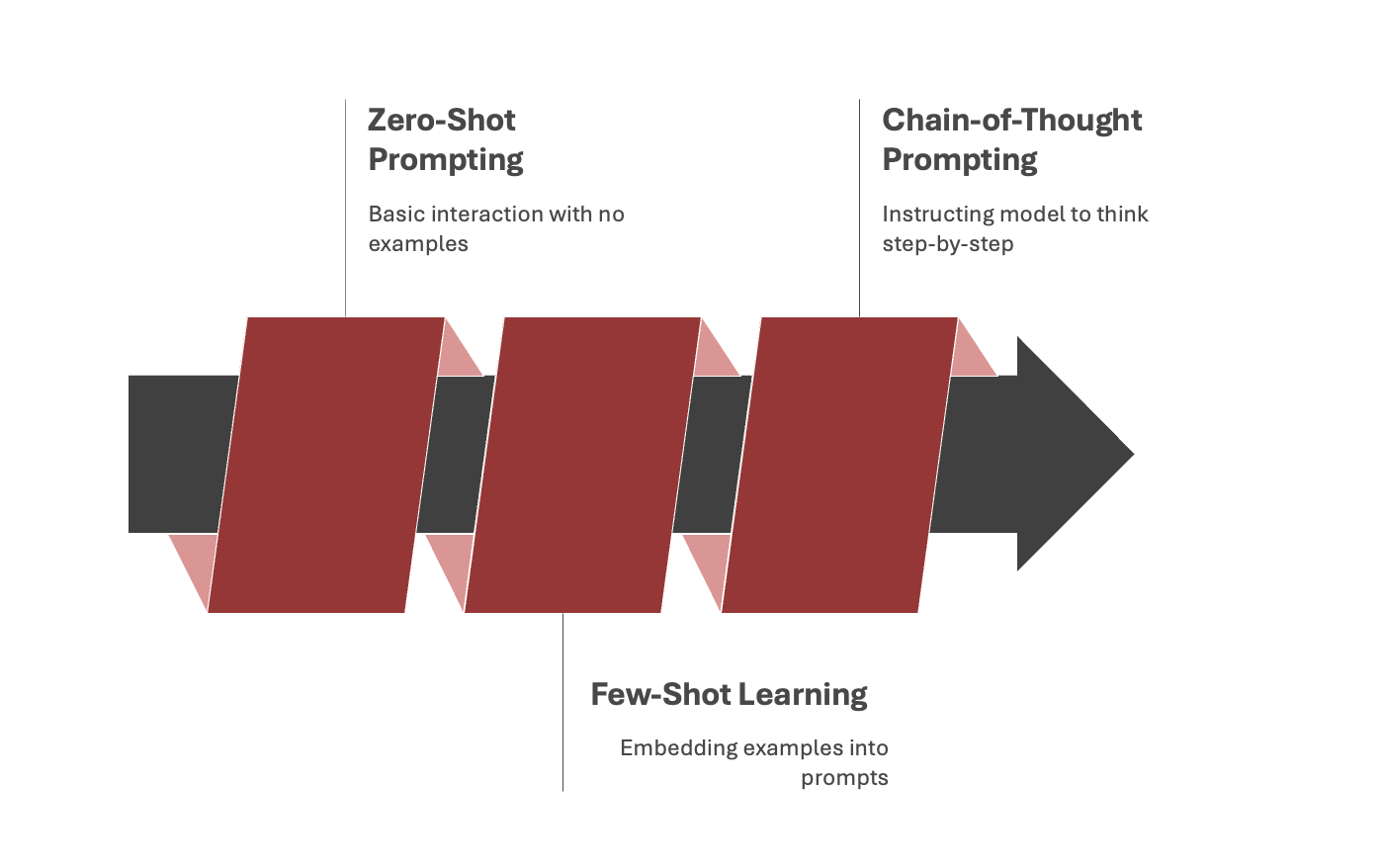
Static prompting techniques have limitations in complex, real-world applications. Here are some examples -
Typically rigid and provides a "one-size-fits-all" solution, which is not dynamic
Techniques do not adapt to real-time information or user preferences.
Large language models lack memory of previous interactions. This results in disjointed and frustrating conversations.
For enterprise applications, creating unique prompts for every edge case is impractical and time-consuming, which defeats the purpose.
Scalability poses a significant challenge for reliable generative AI deployment.
From Prompts to Context: Rethinking Design
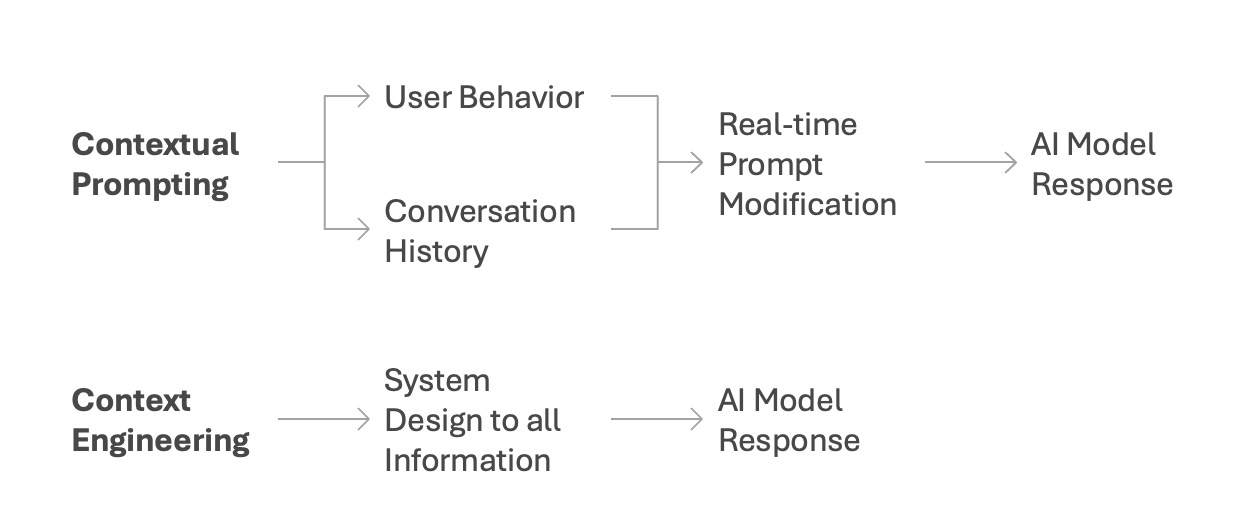
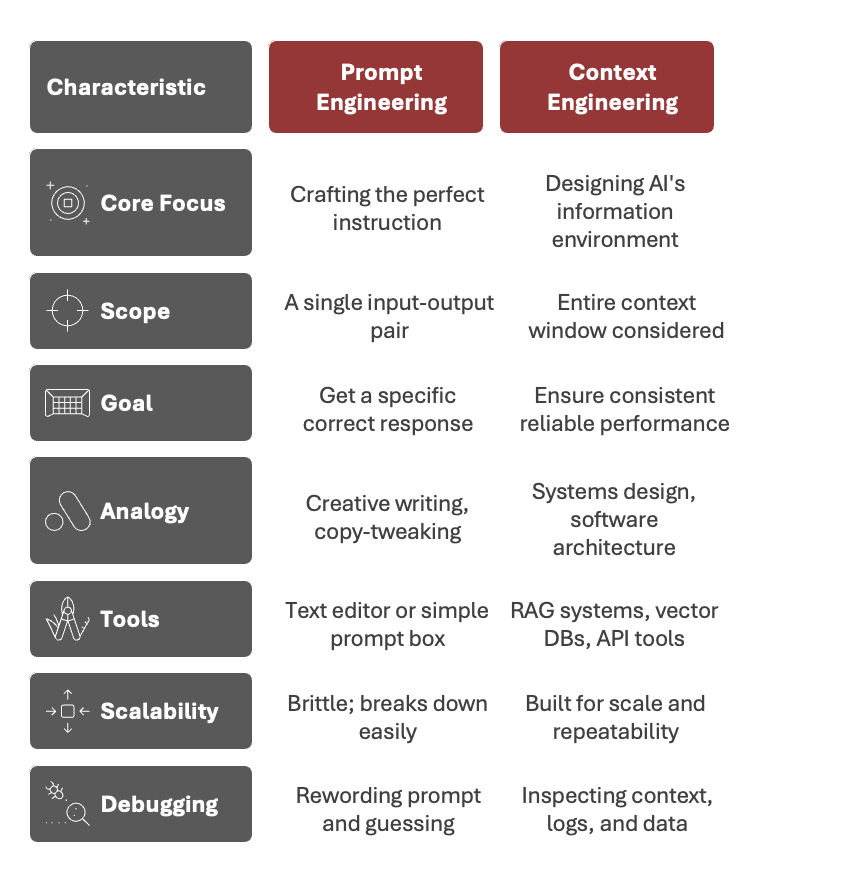
To address the limitations of static prompts, the field is shifting toward a more flexible approach that incorporates two key ideas: contextual prompting and context engineering. Contextual Prompting creates or changes prompts in real-time based on user actions and conversation history. Context Engineering designs the system that determines what information an AI model uses before responding. While prompt engineering focuses on specific phrases, context engineering considers the overall relevance of available information.
Some of the general differences between static based prompt engineering to context engineering
The Technical Toolkit Enabling Contextual AI
This architectural approach uses advanced techniques to create a dynamic context for the AI such as use of 1) Dynamic Prompting & Adaptation 2) AI Memory Architectures 3) Advancing the Retrieval-Augmented Generation (RAG)
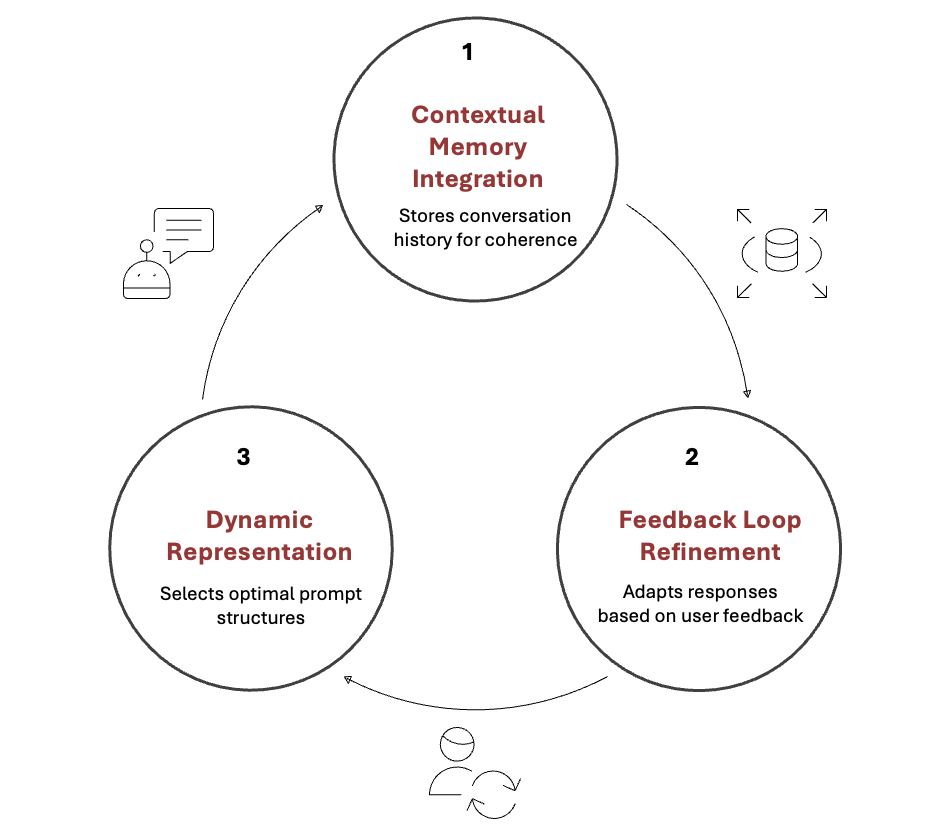
Dynamic Prompting & Adaptation
This mechanism enables real-time adjustments by integrating contextual memory to store conversation history for coherence, refining responses based on user feedback for clarity, and selecting optimal prompts to tailor responses effectively.
AI Memory Architectures
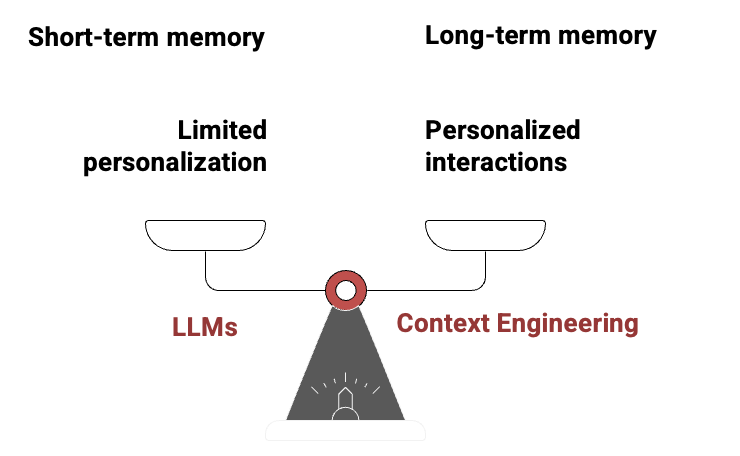
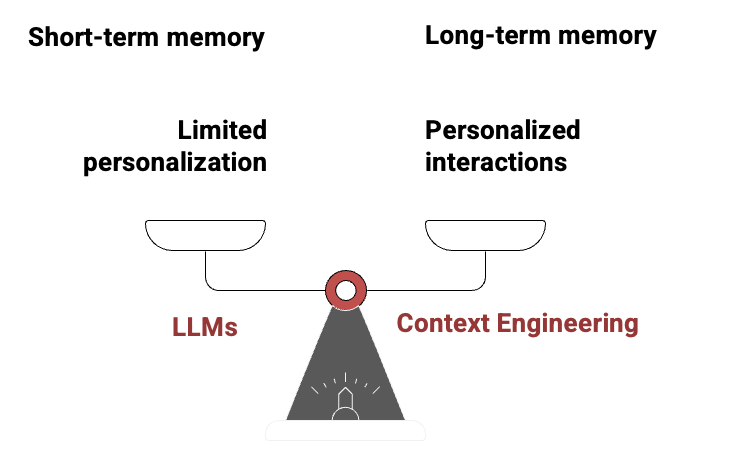
LLMs have short-term memory. Context engineering uses external memory systems for long-term memory, enhancing personalized interactions.
Advancing the RAG
Accessing the RAG retrieves up-to-date information from external sources and incorporates it into responses, grounding them in factual data and reducing inaccuracies.
One can enhance user experiences in various ways by utilizing the above categories. What customers want is that digital assistants are fast, accurate, and aware of their needs. When assistants forget this basic requirement/information, users get frustrated. Context-aware systems using RAG technology can improve these interactions. Another example is in software development, where context-aware coding assistants help programmers manage complex code and increase productivity. Another example is online learning platforms, which also benefit students by providing personalized recommendations. These systems can track learning progress, adjust content difficulty, and suggest helpful resources, making education more engaging and adaptable.
So, to conclude, as we enter the age of Agentic AI, understanding context becomes crucial. This shift will impact not only the technology but also the roles of its creators and users. With advancements come exciting possibilities and significant ethical challenges as well. The real challenge lies in ensuring these systems are transparent, ethical, and aligned with user needs. The future of AI involves designing a context for intelligent, meaningful interactions rather than simply improving prompts. In future posts, we'll explore how context engineering shapes agent behavior, influences system architecture, and opens the door to more adaptive, intelligent AI experiences.